The agent is the easy part
February 2026
 By Marijn Brussel
Everybody wants to talk about the agent, but the agent is the easy part. The hard part is knowing what it’s looking at. So here’s one dental insurance check, followed from the evening before to the moment a boy sits down.
The boy is invented. So is the practice. Our dental build runs these steps overnight: check tomorrow’s schedule against the payer portals, correct what it can, and leave the front desk a note. The birthday rule is one this practice chose to write down.
5:50 p.m. The schedule.
The front desk moves a 2:15 to Friday and goes home. At 8:40 tomorrow, a nine-year-old has a hygiene visit in chair three. Say his name is Owen.
His line carries three codes, typed by an office manager who’s known them by heart for eleven years: D1120 for a child’s cleaning, D1206 for fluoride varnish and D0272 for two bitewing X-rays. To software, that line is a string of characters, unless something tells it otherwise.
2:00 a.m. The patient.
At Owen’s line, the eligibility agent finds two plans, one through each parent’s employer. The record lists the mother’s first, because she filled out the intake form two years ago, with a pen on a chain. Nobody lied. The form is wrong.
When both parents carry coverage, most plans use the birthday rule. The parent whose birthday comes first in the calendar year holds the primary plan. Owen’s father was born in February and his mother in August, so the father’s plan should pay first.
Read that again: which plan pays for a child’s cleaning depends on the birthdays of two people who aren’t in the chair.
2:01 a.m. The portal.
The login moves from the practice’s vault into an isolated, recorded browser session. The agent never holds the password or writes it down.
This payer’s portal logs you out at ninety seconds. Somebody decided ninety seconds is how long you need to read a benefits page. That somebody has never read a benefits page.
The agent enters the father’s member ID, and the portal answers: no member found. So it searches by the subscriber’s name and date of birth and finds one match. The ID on file has a 7 and a 4 standing in each other’s places since the day somebody typed them.
At setup, the practice sorted its fixes into two piles: some pass on a standing rule, others wait for a person. A swapped ID passes, so the agent corrects it on the plan and files a receipt. Finding a fact and deciding what it means are different jobs. So which plan goes first waits for someone who can ask a parent.
2:03 a.m. The benefits.
The portal returns what portals return: active coverage, a deductible and a frequency table that reads like a lease. The plan covers fluoride, but the page doesn’t say up to what age. So the agent records the age limit as not supplied by the payer. A guess is how a family gets a bill in October.
The plan pays for bitewings once every twelve months. Owen’s last set was October 3, so this September 24 visit is nine days short.
Every value lands on the plan, the unknown included. One receipt beside it holds the recording, what the agent read and the rule that let the fix pass.
7:30 a.m. The note.
The front desk opens the day on one screen, where most rows say verified. Owen’s says needs attention, with a three-line note.
- Owen (8:40, chair 3) has two active plans. The birthday rule puts the father’s first, but our record lists the mother’s. Please confirm with the parent at check-in, before the office bills anything.
- We corrected two swapped digits in the father’s member ID and attached the receipt.
- Bitewings are nine days short of the twelve-month limit. Take them at the next visit, or tell the parent the plan won’t cover them. It’s your call.
8:37 a.m. The chair.
The mother arrives with Owen’s little brother, and the front desk asks one question: is Owen’s dad still on his plan through work? He is.
The front desk puts the father’s plan first, which leaves a receipt too, with a person’s name on it. The bitewings wait for the spring visit.
Owen sits down in chair three at 8:41. He wants the grape fluoride and has no idea any of this happened. That’s the job.
Why the map comes first.
Now count what the agent had to know. An appointment belongs to a patient, and a patient can have two plans. Each plan belongs to a subscriber with a birthday and points to a payer, the payer to a portal, and the portal to a login in a vault. A procedure code has a frequency limit, and the limit has a history.
None of that is intelligence. It’s a map. We call it an ontology, which is a fancy word for a plain thing.
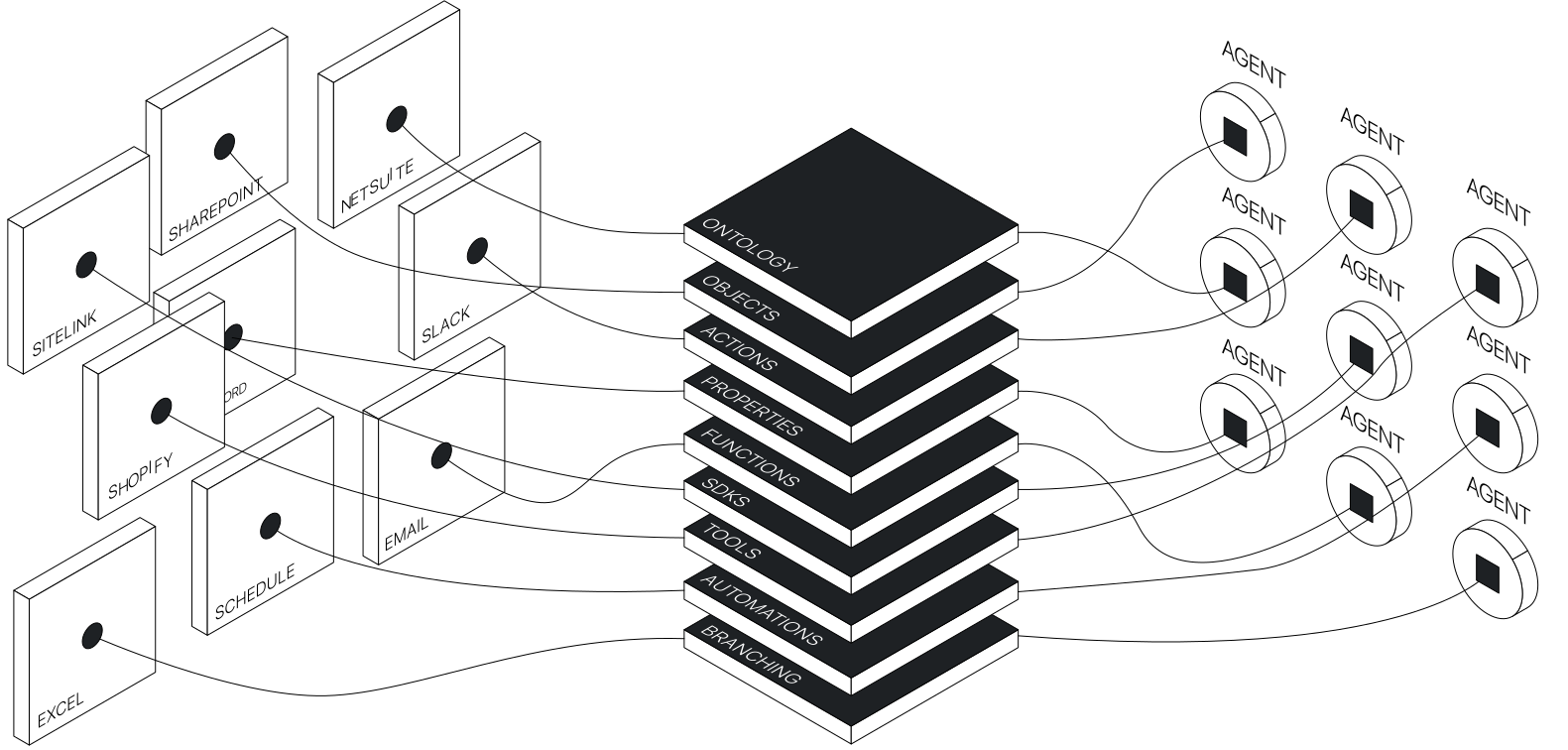
Here’s the part people get backwards. They think a smart enough agent makes the map unnecessary, so you can point the model at the portal and let it figure things out. It will, confidently, in ninety-second increments.
An agent without a map is a brilliant temp on the first morning: fast, polite and wrong about which parent’s plan pays. It’s smart enough to guess, and a good guess looks exactly like an answer.
You can rent a model now. You can’t rent the fact that Owen’s father was born in February.
The map has to stay true.
The work feeds the map. Last night’s fix lives on the plan and this morning’s answer on Owen’s record, so the spring check starts from the truth.
The permissions live in the map too. The agent that fixed the ID can’t post a payment or decide which plan goes first. Those actions carry permissions it doesn’t hold.
That’s the only good reason to trust software at two in the morning, while you’re asleep: the map under the agent, and the fence around what it may touch.
The whole argument, without the fluoride.
- Objects: what the business runs on, in its own words.
- Connections: how they join, so a chair leads to a birthday.
- Actions: what anyone may do, each with its permission and receipt.
- Kept current: the map changes when the business does.
The office manager still knows all of this, and now the map does too. An agent built on anything else runs on her memory, which is excellent, and which takes the first two weeks of August off.
Get the map right, and the agent is the easy part. Skip the map, and the agent is the only part. And it’s guessing at two in the morning.
Bring us one workflow and the systems it touches. We’ll draw your map first. Get in touch.