

Make work more fun
 By Sam Sugarman

People spend too much of their lives at work for the best thing about it to be leaving.
Some of the best days involve a hard problem, somebody you like working with, and the feeling that you finally figured something out. You’re tired afterward. You’re also glad you did it. You made something, helped somebody, or found out you were capable of more than you thought.
Then there are the days spent moving information between systems so everyone can confirm that information has been moved between systems. An email becomes a spreadsheet. The spreadsheet becomes a report. Somebody emails you to ask what the report says.
I’d like us to have more of the first kind.
That’s a big part of why we’re building Mulholland. Our mission is to transform work inside companies to accelerate their progress and prosperity. We think that should mean stronger businesses and a better working life for the people inside them. More room to use your judgment, follow an idea, get good at something, and enjoy doing it.
AI gives us a chance to get some of the bullshit out of the way. There’s necessary work software can take on, and difficult work it can help people do better. What those people get to do afterward is the part that interests me. What might they try? What could they build that they wouldn’t have had the time or tools to build before?
The physicist David Deutsch takes that connection between fun, exploration and progress seriously. I think more companies should too.
Take fun seriously
Deutsch, the author of The Beginning of Infinity, talks about something called the fun criterion. Fun, in this sense, can include doing something extremely difficult. You can be tired, even in pain, and still want to keep going because the problem interests you.
In a conversation with Edwin de Wit, he describes an apparent lack of fun as “a criticism rather than a hard stop.” Something to investigate. What’s getting in the way? Can you approach the problem differently? It’s a fallible clue, not an instruction to abandon anything that becomes uncomfortable.
There’s more to this than finding something interesting. Deutsch takes seriously the knowledge we can’t fully explain: our instincts, feelings and understanding built through experience. Those can conflict with a plan that sounds perfectly reasonable when we say it out loud. Boredom or discomfort may be telling us about a problem the plan hasn’t accounted for.
Think about learning a song you can’t quite play. You keep going back to the same passage. An hour disappears. You’re working hard, but you want to find out how to get it right. Compare that with entering the same address into three different forms. Both take effort. They ask very different things of you.
That’s the distinction I care about at work. A person can enjoy a difficult negotiation, a stubborn engineering problem, or figuring out why a customer keeps saying no. There’s something to discover. They have room to try an idea and see what happens.
Deutsch’s broader argument in The Beginning of Infinity is that progress comes from creating knowledge, developing better explanations and correcting our mistakes. We aren’t stuck with today’s solutions or the limits of today’s knowledge. But someone has to investigate what might work instead.
A business needs room for that too. Somebody has to notice a problem, question the way things are done, and try something whose value isn’t already obvious. If every hour is spoken for, when exactly does that happen?
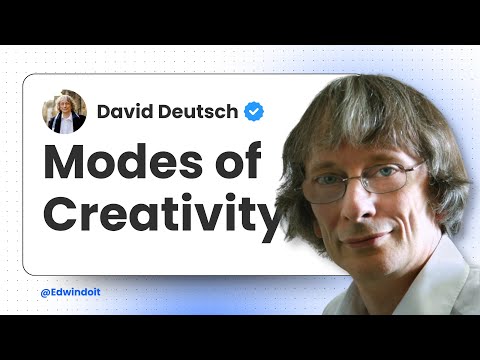
Play here: David Deutsch on fun
What AI could give us back
In a conversation with Naval Ravikant and Brett Hall, Deutsch talks about the time people spend on necessary tasks that demand little creativity. Tools that reduce that mental burden, he argues, could leave more room for human creativity. Naval makes the same connection: removing drudgery gives people more freedom to create.
That strikes me as a much more interesting ambition for AI than making every inbox slightly faster.
Imagine a salesperson coming off a call with a promising customer. Software turns the conversation into proposed account updates, checks the current price list, and prepares the follow-up. The salesperson reviews the commitments. Anything outside the company’s pricing rules goes to the person who can approve it. The approved quote and next step get recorded, so nobody has to piece the whole thing together again tomorrow.
Now that person can spend more time understanding why the customer needs the product, what’s stopping them from buying, and whether there’s a better offer to make. Maybe they visit the customer. Maybe they test an idea they’ve been sitting on for three months.
The software has to work well enough to earn that time back. If your salesperson spends the afternoon checking made-up prices, congratulations, you’ve invented another administrative job.
This is part of what we mean by AI-native services at Mulholland. Software takes responsibility for a defined piece of operational work, with the records, permissions and human review needed to do it properly. Reading a document is useful. Getting the right information into the right system, handling exceptions and completing the task is what can actually clear somebody’s afternoon.
What does the evidence say?
There’s evidence that AI can give people some time back. In a randomized experiment involving 7,137 workers across 66 firms, people assigned access to Microsoft’s AI assistant spent about 1.4 fewer hours a week on email in the second half of the six-month trial. But the researchers didn’t detect a shift in the overall mix of tasks people performed. Saved time doesn’t automatically become more interesting work. [Study]
There’s also evidence that it can expand what people are able to do. In a one-day experiment with 791 professionals at Procter & Gamble, individuals using AI matched the quality of two-person teams working without it on product innovation challenges. Their proposals also drew more effectively on both technical and commercial thinking. That’s one experiment, not proof that every job becomes more fulfilling. But it’s a concrete example of people tackling a problem with capabilities they didn’t have on their own. [Study]
The writers at a16z make a related argument about AI-native workflows: these tools can take chores off your plate and help you make things you previously couldn’t. That’s their investment thesis, rather than a finding about employment. It’s also a useful way to think about the opportunity.
I wouldn’t turn any of this into “AI isn’t taking jobs.” A 2026 Census working paper found that most AI-using firms reported no AI-related change in headcount. A Stanford study, meanwhile, found troubling signs in hiring for young workers in exposed occupations. Those findings can coexist. Neither tells us how the whole thing ends.
We’re optimistic about what people can do with better tools. That optimism comes with a job for the people running companies: decide what you want the new capacity to make possible.
What would your people actually do with the time?
Ask the people doing the work what three things they’d like to spend more time on. What interests them? What could make a real difference for the business? Then look at what keeps eating the day.
A property manager might want to be out at the buildings, seeing what tenants need, instead of assembling the same report from five files. A dental team might want more time with nervous patients. A sales leader might want to coach the people who are struggling and spend an afternoon finding out why a promising account went quiet.
Some of the work keeping them from those things is essential. Compliance matters. Accurate records matter. Somebody needs to check the numbers. The question is how much human attention each part really needs. Gathering the evidence and copying it into a template may be work software can handle. Deciding what to do about an unusual finding may be exactly where you need an experienced person.
And the person doing the job should help make that distinction. What looks like pointless admin from upstairs may catch a mistake nobody else knows about.
Get it right and your team could handle more accounts, produce more benefit breakdowns, complete reviews faster, or spend more time in the field. Those are possibilities to test. Measure whether the work gets done correctly, whether the time is actually saved, and what people can do with it afterward.
That last part matters. You can use every saved minute to cram more bullshit into the day. You can also give people room to pursue the idea that keeps getting postponed. Build a rough version. Talk to a customer. Try it, find out what’s wrong, and improve it.
I’d like the salesperson to leave that call thinking about what they could do for the customer next. And actually have time to try it.
Make work more fun.